.webp)
.webp)
Having visited India multiple times, it’s never easy to pick a favorite. But if you asked us right now, we’d choose Rajasthan. From the colorful sarees that brighten the streets to palaces adorned with intricate frescoes, there’s an undeniable vibrancy here that’s hard to match.
Most travelers know Jaipur, the Pink City, and Jodhpur, the Blue City. Far fewer make it to Bikaner, the Red City, which is far less visited by comparison, even if it isn’t exactly off the map.
Located in northern Rajasthan, Bikaner may not have as many headline attractions as its more famous neighbors, but the experience here is just as rewarding. From wandering the atmospheric lanes of the Old City to exploring its impressive fort and visiting the world’s only rat temple, Bikaner is full of surprises.
If you’re heading toward Jaisalmer, this makes an ideal stop along the way. In this ultimate guide, you’ll find the best places to visit in Bikaner, along with where to eat, where to stay, how to get there, and practical tips to help you make the most of your visit.


.jpg)
Planning Your Trip Last Minute?
Booking hotels in Bikaner: Booking.com is our go-to platform to search for amazing hotels. Here are the top hotels in Bikaner.
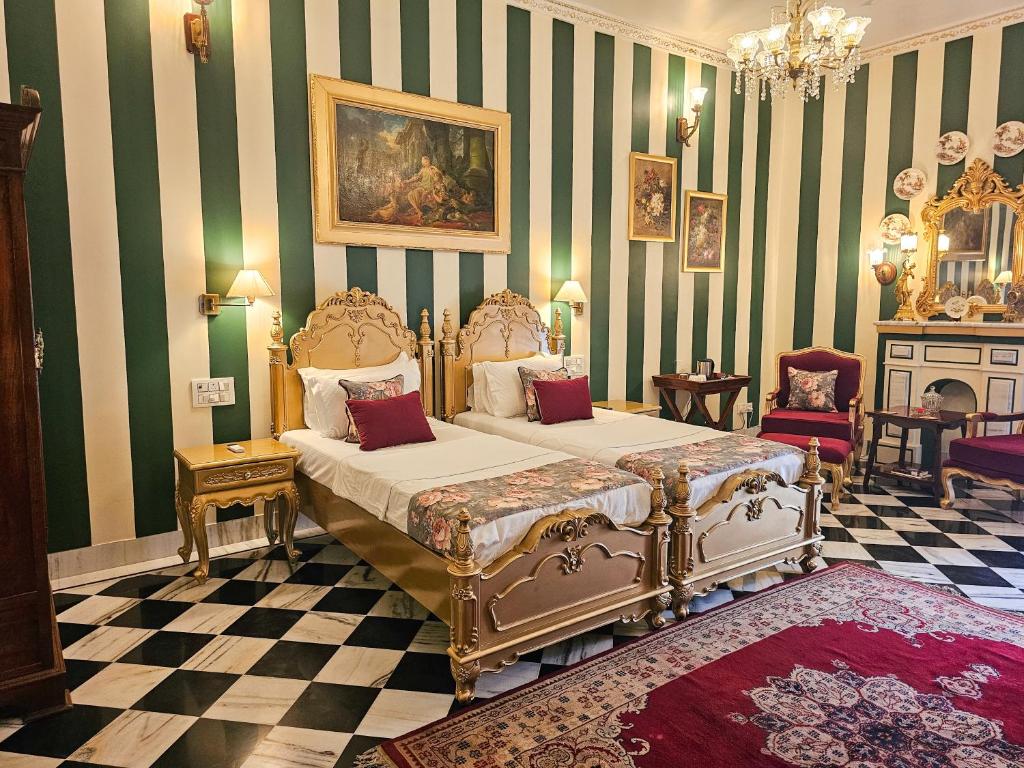
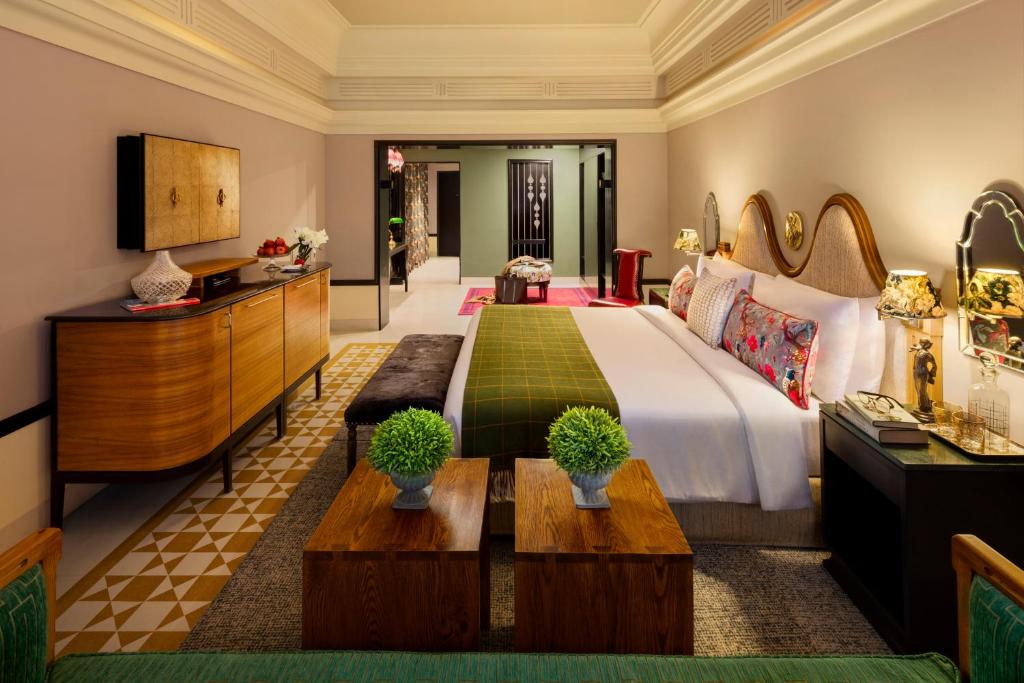
Booking tours in Bikaner: Viator and GetYourGuide offer great tours that make exploring easy, from guided walks to food tours. Here are the top experiences you can book today.
- Guided Old City Walking Tour (Best Seller)
- Full Day Bikaner City Tour (Excellent Value)
- Bikaner Street Food Tour (Top Pick)
Don’t forget travel insurance! Get 5% off your policy with Heymondo, just for being our reader.
.webp)
.webp)
Rajasthan’s Red City
Founded in 1448 by Rao Bika, the son of Maharaja Rao Jodha of the Rathore dynasty, Bikaner began as an independent kingdom in the heart of the Thar Desert. Over time, it developed into a significant walled city, protected by stone fortifications and five imposing gates.
.webp)
Known as the Red City, Bikaner earns its nickname from the forts, palaces, and havelis built from distinctive red sandstone, giving the city a warm, earthy glow that sets it apart from elsewhere in Rajasthan.
Visiting India soon? Make sure your visa is ready–read our quick guide to India’s tourist visa requirements here!
Map of Bikaner in Rajasthan
Top Places to Visit in Bikaner
Many travelers pass through Bikaner as a short stop between other cities in Rajasthan, often visiting on a quick day trip. This guide will help you make the most of your time, even if you only have a single day.
.webp)
.webp)
Most of the main sights can be covered in a day, leaving just enough time to catch a night train onward to Jaisalmer. That said, if your schedule allows, Bikaner is worth staying longer. We’ve also included a few worthwhile day trips in the Beyond Bikaner section later in this article.
.webp)
Old City of Bikaner
If there’s one experience you shouldn’t miss in Bikaner, it’s wandering through the narrow, winding lanes of the Old City. You could easily spend hours getting lost here, weaving between rickshaws, motorbikes, and markets spilling out into the streets.
.webp)
.webp)
.webp)
That said, it won’t be for everyone. The Old City is one of the most chaotic places we’ve encountered in India, arguably even rivaling Chandni Chowk in Delhi or Chor Bazaar in Mumbai. Everywhere you look there’s movement and noise—shops overflowing with goods, vendors selling everything from clothing to snacks, and constant honking echoing through the streets.
Still, no visit to Bikaner is complete without seeing it for yourself.
.webp)
.webp)
For a quieter experience, arrive early before 10am when the streets are calmer and most shops are still closed.
If you’d rather see it at its liveliest, visit in the late afternoon and start near Kote Gate, the historic entrance to the Old City. This is when the area really comes alive, with flower stalls lining the entrance and men sitting roadside carefully mending and polishing shoes.
.webp)
.webp)
A short walk further brings you to the spice market, impossible to miss thanks to the sharp aroma of towering piles of red chillies. For a quick snack, stop at Bhikharam Chandmal, a well-known local shop serving sweets and savory snacks since 1955.
Want to explore with a local guide? Book this walking tour through the Old City of Bikaner with a local expert.
Rampuria Haveli
One of the most recognizable landmarks in Bikaner, Rampuria Haveli stands proudly in the heart of the Old City. Built from rose-colored sandstone, its intricately carved facade and ornate details make it the most photographed building in the city.
.webp)
.webp)
While it isn’t open to visitors, it’s still well worth seeing up close. Visit early in the morning for a quieter experience, when there are fewer tuk-tuks and motorbikes passing by and you can appreciate the craftsmanship properly.
Tip: For a closer look inside a historic haveli, head to Bhanwar Niwas nearby. Built in 1927 and still owned by the Rampuria family, you can either stay overnight or pay a small fee to visit.
.webp)
Seth Bhandashah Jain Temple
Often described as a jewel box, Seth Bhandashah Jain Temple stands out for its vibrant frescoes and finely carved yellow stone, making it a must-visit in Bikaner.
Built in the 15th century by the wealthy Jain merchant Bhandasa Oswal, the temple remains an active place of worship. One of its most fascinating details is the legend behind its construction. It’s said that around 40,000 kilograms of ghee were mixed into the mortar, and on particularly hot days, some is believed to seep through the temple floors.
Note: Remove your shoes before entering, avoid stepping inside the inner shrine (garbhagriha), and walk in a clockwise direction.
.webp)
.webp)
Take your time admiring the intricate paintings across the walls and ceilings. If you get the chance, speak with the resident priest, who is welcoming and happy to share stories about the temple despite the language barrier.

Related read: Visit Jama Masjid: Delhi’s Most Impressive Mosque
.webp)
.webp)
.webp)
Nagar Seth Shree Laxminath Temple
Just next door is Laxminath Temple, the oldest temple in Bikaner, built by Maharaja Rao Lunkaran, the third ruler of Bikaner.
When we visited early in the morning, it was already filled with a steady stream of worshippers. Entry is free, although photography is not allowed inside.
.webp)
.webp)
One detail that stood out was the number of cows gathered near the entrance. Nearby is a gaushala (cow shelter), which is currently home to around 1,850 animals.
Have more time? Consider visiting Bikaji Ki Tekri nearby, believed to be the original fort of Bikaner, built by Rao Bika around 500 years ago.
.webp)
Junagarh Fort
Location: Bikaner Fort, Bikaner
Entrance Ticket: 600Rs ($6.40)
Video Fee: 300Rs ($3.20)
Opening Hours: 10am-4:30pm
Junagarh Fort is the historical heart and main attraction of Bikaner. Unlike many forts in Rajasthan, such as Mehrangarh Fort or Amer Fort, it isn’t perched on a hilltop. Instead, its position suggests it was built as much for comfort and grandeur as for defense. Even so, the fort has never been conquered, and today the modern city has grown around it.
Tip: Visit early in the morning and consider hiring a guide (₹700) or using an audio guide to better understand the fort’s history and intricate details.
.webp)
.webp)
.webp)
Built in 1589 by Maharaja Rai Singh, the sixth ruler of Bikaner, the fort served as the royal residence until 1902. Over time, successive rulers added a series of palaces within its walls, each more elaborate than the last.
.webp)
.webp)
Highlights include Badal Mahal, or the “Palace of Clouds,” with its soft blue interiors and delicate cloud motifs, and Vikram Vilas Palace, home to the grand Darbar Hall.
This grand space is one of our favorite rooms in the fort, with pink stone walls richly adorned with intricate carvings of deities, plants, and animals.
Tip: For more striking forts, visit Mehrangarh Fort in Jodhpur, one of the best-preserved forts in Rajasthan, built by Rao Jodha.
.webp)
.webp)
Prachina Museum
Location: Junagarh Fort, Bikaner
Opening Hours: 9am-6pm
If you have time, visit the Prachina Museum inside Junagarh Fort. Entry is included with your fort ticket, and it showcases artifacts from the royal family dating back to the 19th century, including traditional textiles and royal portraits.
Tip: If you need a break, stop by the Prachina Cafe before heading in. It’s a nice spot to recharge with a coffee while enjoying views of the fort.
.webp)
.webp)
One of the most impressive pieces we saw was a caparison, an ornamental covering for a horse used during processions. Dating to the early 20th century, it is intricately decorated with semi-precious stones and detailed enamel work set on a silver base.
Also read: How to Visit Qutub Minar in Delhi
.webp)
Ratan Bihari Temple
Next to Junagarh Fort, Ratan Bihari Temple is dedicated to Lord Krishna and was built in the mid-19th century by Maharaja Ratan Singh for his wife.
The temple features haveli-style architecture that combines white marble with red sandstone. Look out for its ornate cupolas, jharokha windows, and spacious central courtyard. A small bridge connects it to Rasik Shiromani Ji Temple, a later addition.
.webp)
Historical Palaces
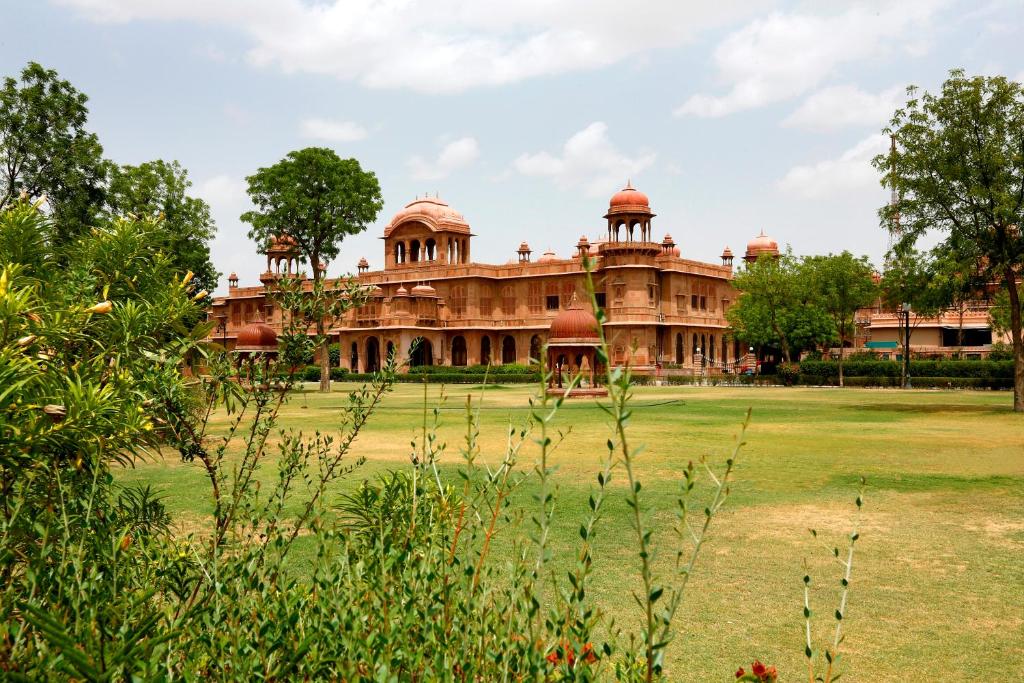
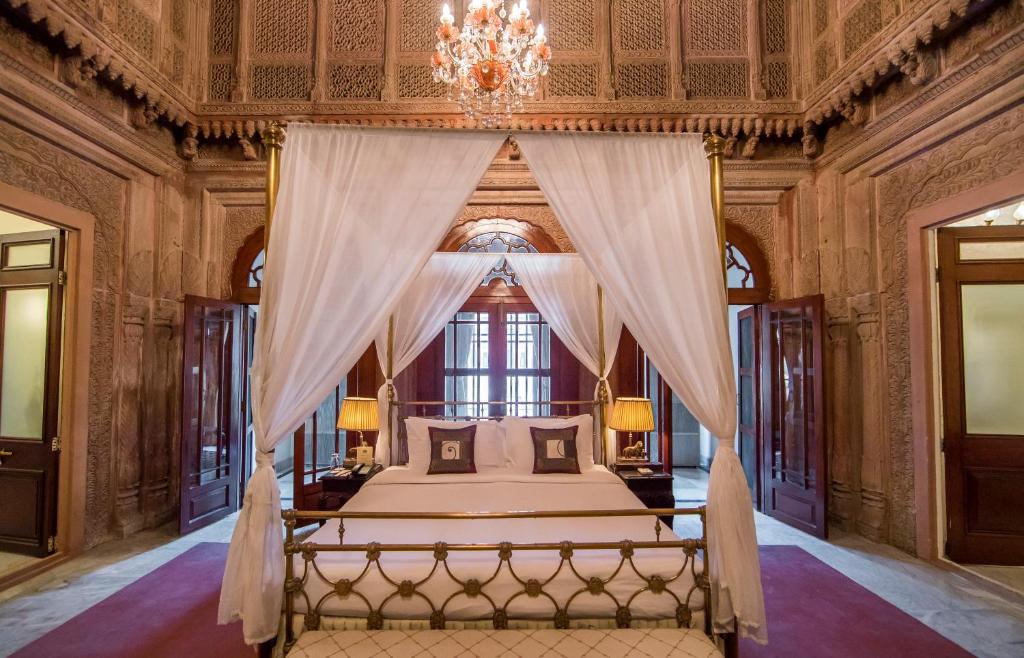
For a glimpse into royal life, visit Lalgarh Palace, still home to the Bikaner royal family. Part of the palace has been converted into a heritage hotel, where you can stay overnight or pay an entrance fee to explore the grounds.
Tip: While here, don’t miss the Sri Sadul Museum, which displays royal artifacts and is open daily except Sundays.
Within the same complex, Laxmi Niwas Palace is another heritage hotel known for its striking red sandstone architecture and opulent interiors.
Beyond Bikaner
If you’re looking for more things to do in Bikaner, these are the best nearby day trips, each just a short drive from the city center. We recommend hiring a driver to make the trip smoother and more comfortable.
.webp)
.webp)
Camel Research Center
Location: Shiv Bari Jorbeer, Bikaner
Entrance Fee: ₹200 ($2.15)
Opening Hours: 10am-6pm
About 20 minutes from the Old City is the National Research Centre for Camels, India’s only camel research center. Established in 1984, it offers insight into different camel breeds and conservation efforts.
When we visited, there were about 265 camels in the facility. One of the highlights was meeting a caretaker who proudly introduced us to a four-day-old baby camel.
.webp)
Guides are available for hire at the entrance, though it can easily be visited independently. There’s also a small museum on-site, and you can try camel dairy products, including tea, camel milk, and even ice cream.
Note: Souvenir shops are available as well, but we found a small stall just outside the gates selling delicious camel milk chocolate for ₹300 ($3.20).
.webp)
Devi Kund Sagar
Location: Shaukat Usmani Nagar, Bikaner
Entrance Fee: ₹20 ($0.20)
Opening Hours: 9am-5pm
Just near the Camel Research Center lies Devi Kund Sagar, the royal cremation ground of Bikaner. The site is dotted with intricately carved cenotaphs, including the oldest belonging to Rao Kalyanmal, the fifth ruler, and the most recent dedicated to Maharaja Karni Singh, the 23rd and last ruler.
Tip: Visit early in the morning or late afternoon for the best light. Shoes must be removed at the entrance, though slippers are provided.
.webp)
You can wander through the surprisingly peaceful grounds and admire the detailed paintings and carvings on the cenotaphs. Vertical memorial slabs mark male cenotaphs, while female cenotaphs feature engraved footprints.
Earlier cenotaphs are made of red sandstone, while the newer ones are built from white marble. Most chhatris have 12 or 16 pillars topped with either a single dome or a cluster of domes, with their size reflecting status.
Related read: For grand tombs and mausoleums, make sure to visit Agra, home to some of India’s most impressive sites, including the iconic Taj Mahal!
.webp)
.webp)
.webp)
Shree Karni Mata Temple (Rat Temple)
Location: Deshnok, Rajasthan
Entrance Fee: Free
Video Fee: ₹70 ($0.75)
Camera Fee: ₹30 ($0.30)
Opening Hours: 4am-10pm
Widely known as the only rat temple in the world, Karni Mata Temple sits about 30 kilometers south of Bikaner. Around 30,000 black rats live here and are considered sacred, believed to be reincarnations of the devotees of Karni Mata, a 14th-century warrior sage later worshipped as a Hindu goddess.
Note: It’s certainly a unique experience, but not for everyone. If you’re unsure about visiting, it may be best to skip this stop.
.webp)
.webp)
.webp)
Shoes must be removed at the entrance, and it’s important to remain respectful inside the temple. Be careful not to step on any rats, as this is considered highly inauspicious. If one is accidentally killed, it must be replaced with a silver or gold replica. Spotting a white rat is said to bring good luck.
Don’t have much time? Explore Bikaner’s main highlights on a guided tour with a visit to Karni Mata!
Eating and Drinking in Bikaner
Ganesha: Part of Hotel Bhairon Vilas, this atmospheric cafe features patio seating and is filled with unique antiques. It offers a wide selection of drinks, and upstairs, the restaurant has an open rooftop. 11am-11pm
Jeeman: A local favorite near Junagarh Fort, known for its flavorful thalis. Best sellers include the Rajasthani thali and Dal Baati Churma thali. 9am-9pm
.webp)
.webp)
Gallops: One of the most popular restaurants in Bikaner, known for its authentic Rajasthani flavors and outdoor seating overlooking the fort. Must-try dishes include lal maas and a range of tandoori options. 10:30am-10:30pm
Tip: Discover more of Bikaner’s food scene on this guided street food tour, where you’ll sample 7 must-try local delicacies.
Plan Your Trip to Bikaner
Best Time to Visit
You can visit Bikaner year-round, but the best time is during winter, from November to February, when the weather is cooler and more comfortable for exploring the Old City and sightseeing.
Note: We visited in late February and found the evenings comfortable with just a light sweater. During the day, however, it was still quite warm, with temperatures reaching around 30°C.
.webp)
.webp)
Try to avoid the summer months, especially April and May, when temperatures can soar between 40-47°C, bringing intense heat and dry desert conditions.
.webp)
Where to Stay
Bikaner has plenty of accommodation options, with boutique stays and luxury hotels being the most popular. Since most travelers arrive and depart by train, it’s best to stay near the station for convenience, especially if you’re short on time. Find all accommodations in Bikaner here!
Here are our most recommended places to stay in Bikaner:
How to Get There
Here are the most popular options to get to Bikaner.
Train: The best option for longer distances, with direct connections from major cities like Delhi, Jaisalmer and Jodhpur.

Book your train to Bikaner here!
Planning to travel India by train? Here’s everything you need to know, from booking tickets to choosing the right class, plus our top tips.
.webp)
Bus: A good alternative if trains are full, with daily services from across Rajasthan, including routes from Jodhpur and Jaipur.
Book your bus to Bikaner here!
Private Car: The most convenient option, especially if you’re coming from nearby cities. You can easily hire a private driver for a more comfortable and flexible journey.
Getting Around
On Foot: The best way to explore the Old City of Bikaner is on foot. It’s the easiest way to navigate the narrow lanes and take in the atmosphere.
Tuk-tuk: A convenient option for getting around the city, with drivers easy to find almost everywhere. Just be sure to agree on the price before hopping in. We found that many drivers quote around ₹200 per ride, regardless of distance.
.webp)
Private Car: Ideal for day trips outside the city center. Having air-conditioning makes a big difference, especially on long drives in the dessert heat.
Read more: Best Ways to Get Around India
.webp)
.webp)
And that’s our list of the best things to do in Bikaner!
Whether you’re stopping briefly on your way to Jaisalmer or spending a few days exploring, Bikaner offers a side of Rajasthan that feels a little less polished and a little more authentic.
If you’re planning a wider trip through Rajasthan, check out our guides to Jaipur, the Pink City, and Jodhpur, the Blue City.
Let us know if you have any questions about Bikaner in the comments below!
Some links in this Bikaner Guide may be affiliate links.
This means that if you make a purchase after clicking on one of our links, we will receive a small commission at no extra cost to you. Please know that by doing so, you are supporting Colorful Journeys in continuing to provide free high quality content to help you in your travels!
.webp)
.webp)
.webp)
